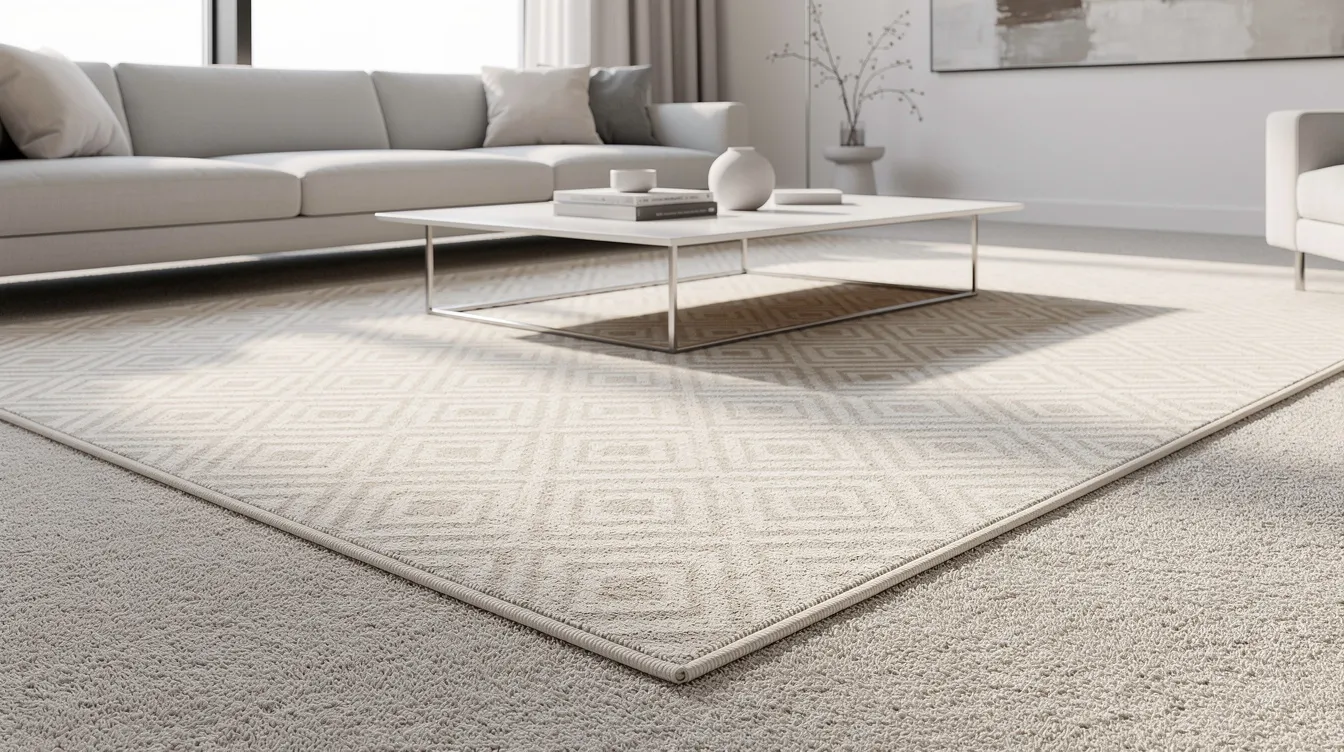
How to Keep Rug Corners Down on Carpet (and Stop Curling for Good)
Few things are more annoying than walking across your room and catching your toe on a flipped-up rug corner. When area rugs sit on wall-to-wall carpet, curling corners become a recurring problem that looks messy and creates a genuine tripping hazard. The good news: you can fix it permanently with the right approach.
This guide covers every proven method for keeping rug corners down on carpet, from quick same-day fixes to long-term solutions that stay put for months.
Quick Fixes to Keep Rug Corners Down on Carpet
If you need your rug corners flat right now, here are the fastest options that deliver results within a few hours to overnight:
-
Double-sided rug tape on carpet - simply peel, stick to the rug corner, and press into the carpet pile for an instant hold.
-
Small rug grippers or curl stoppers - pre-cut adhesive pads that attach to the underside of each corner.
-
Reverse rolling - flip the rug and roll it in the opposite direction to counteract fiber memory.
All of these methods are safe for most area rugs and carpet types when used correctly. That said, always test in an inconspicuous spot first, especially with delicate rug fibers or light-colored carpet.
For a reliable, low-profile solution that works great on wall-to-wall carpet, our recommended tape to keep rug corners down on carpet is worth considering. It anchors curled corners and rug edges without being visible.
Why Rug Corners Curl on Carpet in the First Place
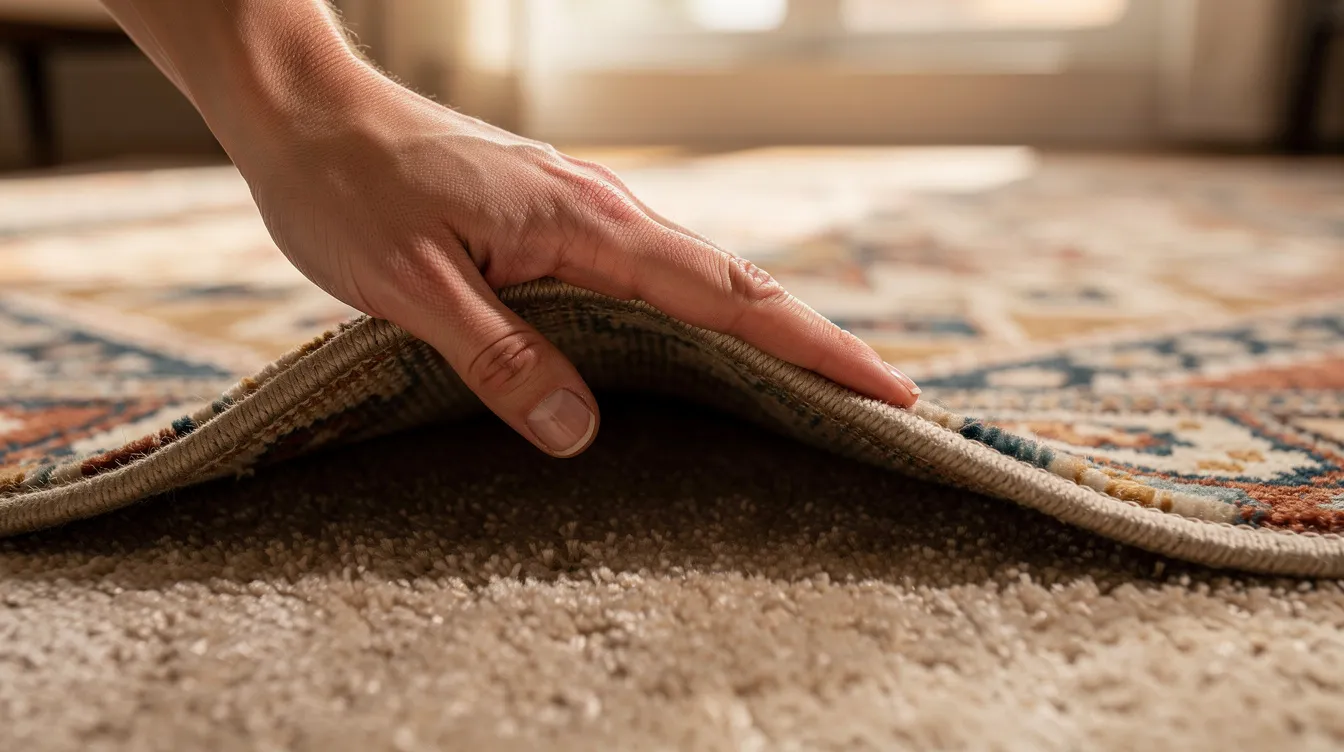
When a new rug arrives, it's typically been tightly rolled for shipping and storage. This creates "memory" in the rug fibers and backing - the material literally wants to hold that curled shape. On soft, compressible carpet, the problem is amplified because there's no firm, flat surface to push back against the curl.
Common causes of curling corners on carpet include:
-
Roll or fold memory from shipping, especially at the outer edges where bending stress is greatest.
-
Heavy furniture pushing and buckling rug edges nearby, causing corners to lift. Conversely, heavy furniture can also help anchor rugs and reduce corner lifting when placed strategically.
-
High traffic areas where foot traffic drags and catches rug edges against the carpet pile.
-
No rug pad or the wrong rug pad, leaving the rug free to shift and bunch.
-
Humidity and temperature changes - natural fibers absorb moisture and expand unevenly, then shrink as humidity drops, pulling edges upward.
-
Carpet pile interaction - rugs over wall-to-wall carpet behave differently than rugs on hard surfaces. The carpet compresses underfoot, offers less friction, and the pile itself can push at rug edges, creating more flex and bunching than you'd see on hardwood floors or tile floors.
Understanding the root cause helps you choose the right fix. Fiber memory responds best to heat and reverse rolling, while persistent shifting requires mechanical grip like rug tape or grippers.
Best Long-Term Method: Use Tape to Keep Rug Corners Down on Carpet
For busy households, a purpose-made tape to keep rugs down over carpet is usually the most durable and discreet solution. Double-sided tape can secure rug corners to the floor without visible hardware, and it holds up under daily foot traffic.
What is rug corner tape on carpet? It's a double-sided, carpet-safe adhesive designed specifically to anchor rug corners without damaging fibers on either side. Quality options use silicone-based or acrylic adhesives that bond firmly yet remove without leaving heavy residue.
Key benefits include:
-
Stops curled corners and rug edges from lifting
-
Reduces tripping hazards in hallways, living rooms, and entryways
-
Keeps area rugs aligned on carpet without visible fasteners
-
Can be removed or refreshed without damaging carpet when peeled slowly
Rug tape can secure corners and prevent curling even on thick, plush carpet where other methods often fail.
How to Apply Rug Tape Step-by-Step
Proper application makes the difference between tape that holds for a few months and tape that peels off in a week. Here's how to do it right.
Prepare the surface. Vacuum the carpeted area under each rug corner thoroughly. Wipe the back of each rug corner with a dry cloth to remove dust and loose fibers. Both surfaces must be completely dry - moisture weakens adhesive bonds.
Cut and position the tape. Cut tape strips to fit along the very tip and edges of each rug corner. Focus on the corners and edges, not the center of the rug. For most rugs, two strips per corner (one along each edge) provide the strongest hold.
Apply the adhesive side to the rug first. Peel the backing from one side and stick the tape firmly to the underside of the rug corner. Press and smooth it to eliminate air bubbles.
Press rug corners into the carpet. Peel the remaining backing to expose the second sticky side. Lay the rug corner down onto the carpet and press firmly, holding for 10–20 seconds per corner for the best adhesion.
Check after 24 hours. Walk over the corners and re-press if any edge lifts slightly. On thick or plush carpet, the adhesive may need a full day to fully seat into the carpet pile.
Safety note: avoid using generic duct tape or packing tape. These leave residue, can damage carpet fibers, and often fail within days. Use tape designed specifically for flooring applications.
When Tape Is the Best Choice vs. Other Solutions
Not every method works equally well on carpet. Tape is the ideal choice in these situations:
-
High traffic hallways and entryways where corners get kicked or caught repeatedly
-
Stair landings with runners on carpet that shift under foot traffic
-
Homes with kids or elderly residents where even a slightly raised edge is a security concern
-
Home offices where chair wheels constantly catch rug edges
Tape alone may not be enough for very large, heavy rugs on extremely plush carpet. In those cases, combine a rug pad with tape - the pad stabilizes the entire rug while the tape specifically locks down stubborn corners.
Tape is especially effective for persistent curled corners that keep popping up even after reverse rolling or steaming. When gentler methods have failed, adhesive provides the mechanical grip needed to keep your rug flat for good.
Other Ways to Keep Rug Corners Down on Carpet (with Pros and Cons)
While rug tape is often the most secure option, other methods are useful depending on rug type, budget, and how permanent of a solution you want. Here are the main alternatives, each with specific pros and cons for carpet situations.
Using Rug Pads Under Area Rugs on Carpet
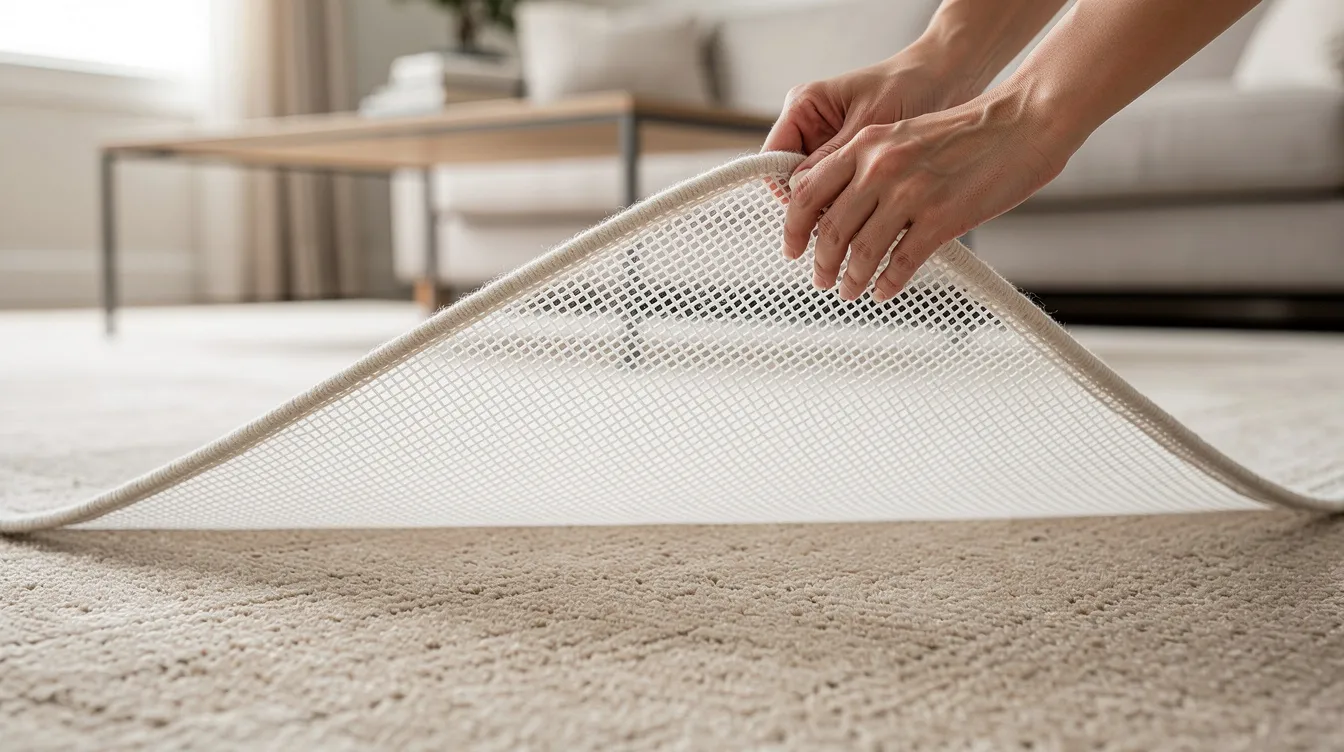
A rug pad is essential for preventing rug slipping and curling on carpet. It stops the entire rug from creeping and buckling, which indirectly keeps rug corners flat.
For carpet-on-carpet situations, choose a thin felt pad or a specially designed rug-to-carpet mesh pad. Using a rug pad made for carpets is the best long-term solution for overall rug stability. Avoid thick rubber pads meant for hardwood or tile - they create too much cushion on carpet and can actually make edges float more. Ideal thickness is 2–3 mm for mesh grip pads or about ¼-inch for felt-rubber hybrids.
The pad should be cut 1 to 2 inches smaller than the area rug on all sides, keeping pad edges invisible while still supporting all four corners. Rug pads can prevent slipping and curling of rugs, distribute weight evenly from furniture legs to reduce bunching, add insulation, and protect the carpet underneath from wear patterns. Proper rug padding is recommended to prevent slipping even when combined with other methods. Quality pads last 5–10 years with moderate traffic.
Rug Corner Grippers and Curl Stoppers
Dedicated rug corner grippers are pre-cut pieces that stick to the back of each rug corner to hold it down. Curl Stop Anti-Curling Systems, for example, use adhesive to hold down rug corners and are a popular curl stop option. Rug corner grippers are reusable and washable products, making them a practical choice for renters or anyone who rearranges frequently.
Some versions use reusable hook-and-loop connections between rug corners and a small patch anchored to the carpet. Velcro anchors secure rug corners to carpet fibers this way, providing a strong yet removable bond. Rug corner weights have adhesive and anti-slip materials that add downward pressure on each corner.
Pros: clean installation, reusable, no cutting required, very low profile so corners remain flat and discreet.
Cons: may cost more than tape (weighted rug corners can cost between $15 to $50), may need occasional repositioning if carpet is very soft or heavily trafficked.
Use corner grippers on particularly stubborn corners while using a larger rug pad for overall stability.
Rug Pins and Tacks for Carpeted Floors
A cautionary note first: rug pins are effective but more permanent and suitable only for carpeted floors - never use them on hardwood, tile, or vinyl where they'd cause visible damage to a slick surface.
Rug pins are small tacks or spiral pins that pass through the rug corner and into the carpet and underlay, creating a fixed mechanical hold. Install them at around a 45-degree angle so they grip carpet fibers securely without poking through to the floor surface.
Safety reminders: check regularly that pins haven't worked loose, and keep them away from kids and pets. Rug pins are best positioned as a last-resort solution for problem rugs in very high traffic areas where other non-invasive methods have failed.
Gentle Methods to Flatten Curled Corners Before Securing
Before putting any adhesive solution in place, it's smart to relax the rug fibers first so the corners want to lay flat naturally. This makes every securing method - tape, pads, grippers - work better and last longer.
On carpet, these approaches help but usually need to be combined with a securing method to keep corners flat long term.
Safety first: always check the rug label, avoid excessive heat on synthetic or rubber-backed rugs, and test any moisture method on a small area before treating the whole rug.
Reverse Rolling and Folding Rug Corners
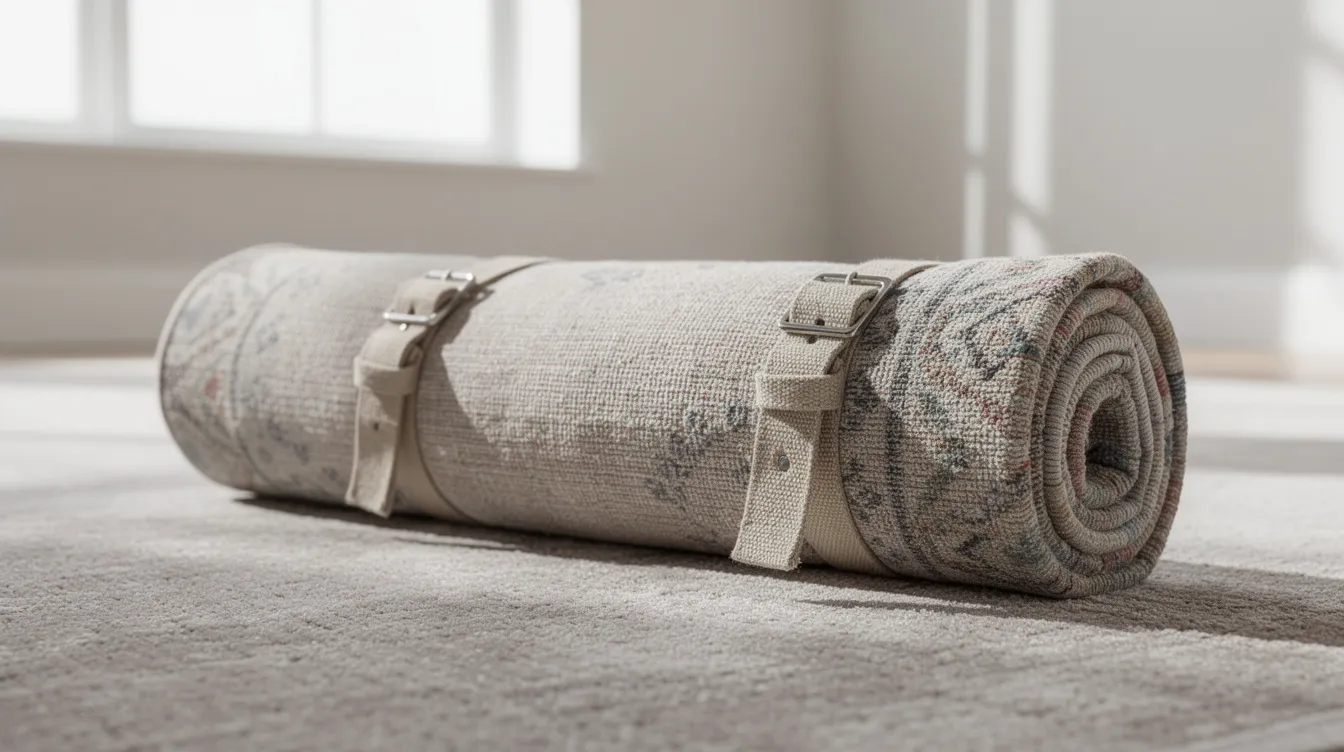
Reverse rolling is one of the simplest, zero-cost ways to fight fiber memory in a new rug. Rolling a rug in the opposite direction can help flatten it by counteracting the curl set during shipping. The reverse-rolling method can help relax tension in new rugs effectively.
Flip the area rug over, roll it tightly in the opposite direction of the curl, and secure with straps or twine. Leave it for several hours or overnight. For just one stubborn rug corner, gently fold that corner under itself for 12–24 hours instead of rolling the entire rug.
After unrolling, lay the rug flat on carpet and walk over the corners or place a flat, heavy object on each corner to help it set. Some rugs - particularly thick wool or jute - may need to go through this cycle multiple times before staying flat.
Using Warmth, Steam, and Weight Safely
Moderate heat and moisture can soften rug fibers and backing so curled corners relax more easily. Ironing or steaming rug corners can help flatten them when done carefully. Low-heat steaming specifically works well for curling corners that resist other methods.
Place a thin cotton towel over the back of each curled corner and apply a warm (not hot) iron or handheld steamer, moving constantly. Never let the iron make direct metal-to-rug contact.
Then place books, bricks wrapped in a towel, or a flat board with weight on top of the warm corners until completely cool and dry. Weighted rug corners can keep them in place and prevent curling during this process. Ice cubes and weight can flatten rug corners overnight as an alternative - the melting ice provides gentle moisture while the weight holds the corner flat.
On carpeted floors, use minimal moisture and remove any excess with a dry towel to protect the carpet underneath. Avoid high heat on rugs with latex or rubber backings, as this can cause warping or odors.
Sun and Time for New Rugs
Many new rugs naturally flatten within a few days to two weeks when given space and gentle warmth. Patience count here more than you might expect.
Lay a new rug flat in a sunny indoor spot near a window for a few hours, rotating so all corners warm evenly, then move it to the carpeted room where it will live and press or weight the corners. Weighted rug corners can prevent curling effectively during this break-in period.
Avoid leaving synthetic or rubber-backed rugs in direct, intense sun for many hours - colors can fade and backing can dry out. Also note that peel-and-stick vinyl tiles can prevent rug corners from curling when placed as weight on corners during this flattening stage.
Combine this break-in period with a rug pad and tape so curled corners do not reform after the first week. Patience plus light intervention often solves mild curling without more aggressive methods.
Frequently Asked Questions About Curling Rug Corners on Carpet
How long does it take for a new rug to flatten on carpet? Mild fiber memory usually relaxes within 3–7 days. More stubborn curl may take two weeks with reverse rolling and weights. If corners still lift after a week, it's time to install tape or grippers rather than just waiting.
Can I use the same rug tape on both hard floors and carpet? Rug tape prevents corners from curling on hard floors, but carpet requires tape formulated to grip into pile fibers. Dedicated carpet-safe tape uses silicone or acrylic adhesives that bond into carpet without leaving residue. Standard floor tape often won't adhere well to soft carpet.
Can I iron a rug directly on top of carpet? Yes, but carefully. Always iron over a towel, use low heat, and avoid soaking the carpet underneath with heavy steam. Move the iron constantly and test on a hidden area first. This works great for relaxing stubborn corners before taping them down.
Will a rug pad alone stop curling corners? A rug pad prevents overall slipping and bunching, which helps - but for corners that are already curled, combining a pad with corner tape delivers the flattest, most lasting result. Interior designers often recommend this combination for rooms with high foot traffic.
What about putting furniture on rug corners instead? Heavy furniture can help anchor rugs and reduce corner lifting. It's a suitable temporary fix, but it limits your room layout. Corners not covered by furniture will still curl.
Does choosing the right rug size matter? Absolutely. Choosing the right rug size can prevent corner curling. A rug that's too small for the room shifts more easily, and edges near doorways or walkways are more prone to catching and flipping. Leave enough clearance from walls and furniture so edges aren't constantly disturbed.
What's the easiest long-term fix I can install today? A quality double-sided carpet tape designed for rug-on-carpet use. Simply peel the backing, attach it to each corner, and press the rug firmly into the carpet. It provides security against lifting, stays nearly invisible, and can be refreshed every few months as needed.
Final Tips for Keeping Rug Corners Flat and Safe on Carpet
The most effective strategy combines fiber-flattening methods with a mechanical solution. Relax the curl first through reverse rolling or warmth, then lock everything down with rug tape, pads, or grippers for lasting results.
Build these maintenance habits into your routine:
-
Vacuum under rug edges occasionally to prevent dirt buildup that reduces grip
-
Re-press corners after moving furniture or deep cleaning
-
Check tape or grippers every few months and replace when adhesion weakens
-
Replace worn pads - functionality degrades over time, especially in high traffic areas
Choose a rug that fits the room properly to avoid shifting and catch points that create curled corners. A rug that's the right scale for your space naturally stays flatter with less intervention.
Even the most stubborn curling rug corners on carpet can be fixed. Start with the right combination of methods, and your rug will stay flat, safe, and looking exactly the way you want it to.
Buy Carpet Tile Tape